
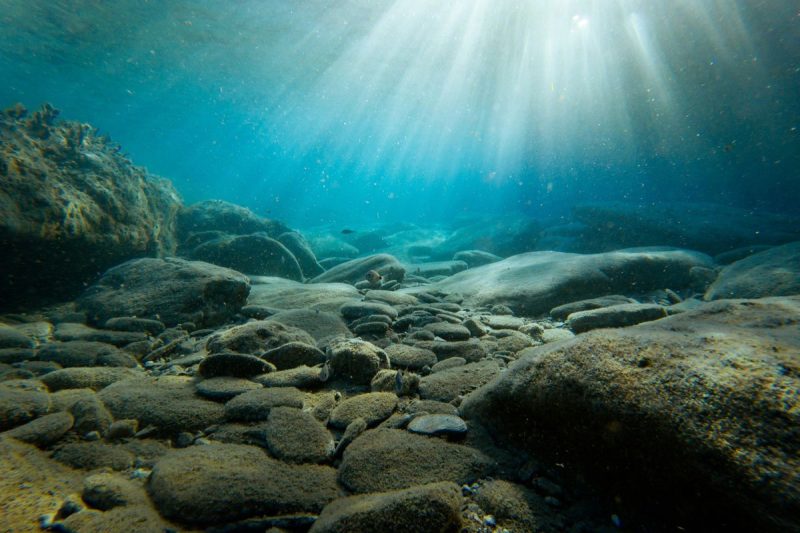
The seabed of the Baltic Sea is scattered with rock-like lumps that may one day fuel the global race for rare metals.
But new research suggests these formations, known as mineral concretions, are far more than a potential resource: they are complex, slow-growing structures that play an important role in marine ecosystems.
A team from the Geological Survey of Finland (GTK) has used synchrotron-based imaging at the Canadian Light Source (CLS) in Saskatchewan to probe the makeup of these concretions.
Their findings shed light on how the lumps form, how they differ across environments, and how their removal could disrupt life on the sea floor.
“These concretions act like a sponge, absorbing anything that is in the water column,” said geologist Joonas Wasiljeff, who was part of the GTK team. “We still don’t know enough that we can just go collect everything from the seafloor. If we remove them that may have drastic impacts on the ecosystem that may not ever recover.”
The GTK team identified three broad types in the Baltic Sea: iron-rich crusts, manganese-heavy discs and spheroidal nodules. Each type’s shape and composition are closely linked to environmental factors such as currents, sediment deposits and oxygen levels.
Crusts typically form in shallower, turbulent waters near shore, where stronger currents bring in terrestrial material like clays and micas. These iron-rich formations also contain trace amounts of vanadium and some rare earth elements.
By contrast, the discs and spheres tend to form in calmer, deeper water. They are more manganese-rich and host metals such as zinc, cobalt and higher concentrations of rare earth elements.
Despite the presence of resources, the rock-like lumps do more than trap metals. They provide critical hard surfaces on the seabed, where creatures like clams can anchor and other marine life can establish itself.
Their removal, Wasiljeff cautioned, risks breaking links in the food web and destabilizing benthic ecosystems.
At the same time, the economic allure of these deposits is clear. With rising demand for metals such as cobalt and rare earth elements — critical for batteries, electronics and renewable energy technologies — seabed mining has become a frontier of resource exploration.
China, Norway and Pacific island nations have already advanced projects targeting similar deposits in international waters.
The GTK study adds weight to calls for caution, showing that the same features that make these concretions promising as a resource also make them slow to form and ecologically significant.
The timing of the Baltic findings is also crucial as seabed mining takes on new geopolitical weight.
US President Donald Trump’s push to build an American stockpile of critical minerals from the seafloor has gained fresh momentum with Bahrain throwing its support behind Impossible Metals, a California startup.
However, debates regarding deep sea mining’s feasibility continue. The International Seabed Authority (ISA), the UN agency tasked with regulating deep-sea mining, has issued over 30 exploratory permits but has yet to finalize rules for commercial extraction.
That regulatory vacuum has fueled unilateral actions by states and companies alike, raising questions about whether collective governance of the seabed can hold.
The researchers noted that the mineral phases and formation mechanisms of Baltic Sea concretions resemble those found in other shallow marine environments worldwide. That suggests lessons from the Baltic could apply to seabed resource debates in other regions.
The broader implication, according to Wasiljeff, is that decisions on seabed mining must weigh both the potential supply of critical metals and the ecological functions of these deposits.
Securities Disclosure: I, Giann Liguid, hold no direct investment interest in any company mentioned in this article.