
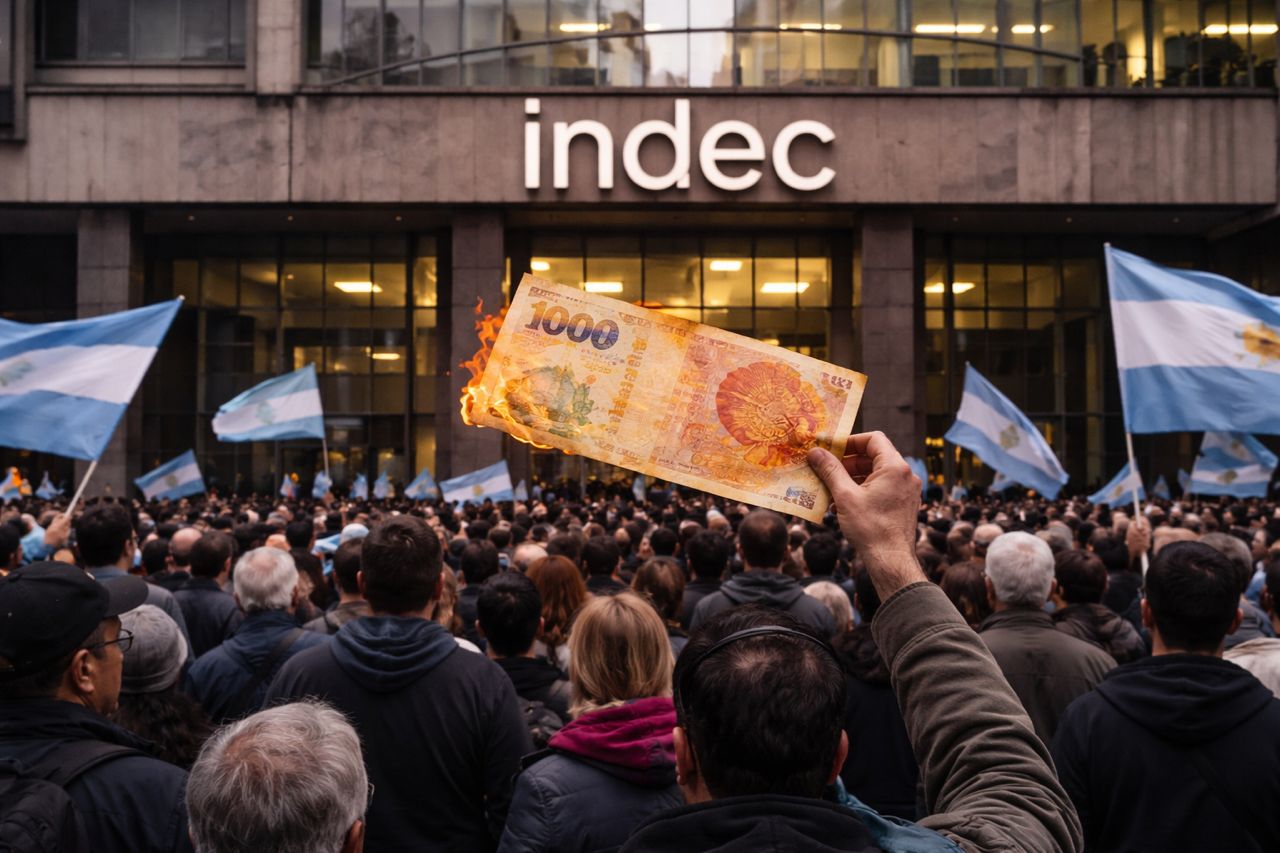
The sudden resignation of the head of Argentina’s statistics office this week revealed problems at the core of President Javier Milei’s economic plan, turning the country’s inflation numbers into a political hot spot.
Economy Minister Luis Caputo admitted that the government’s decision to postpone an upgrade to the inflation calculation methodology, a delicate move in a nation plagued by previous data manipulation scandals, was the reason behind INDEC head Marco Lavagna’s resignation.
In 2013, the International Monetary Fund chastised Argentina for underreporting its figures.
Lavagna’s departure prompted opposition members to charge that the administration was attempting to preserve Milei’s political reputation.
Reducing inflation has been Milei’s main strategy to increase popularity, according to Congresswoman Julia Strada, who called the move a “trick.”
Lavagna’s departure has stoked a broader discussion about transparency and trust at a time when the president is pointing to a dramatic decline in monthly inflation from double digits to less than 3%.
Autonomy concerns and delayed formula update
Although the executive branch appoints the INDEC chief, the position has historically functioned independently of politics. Consultant Marcelo Garcia views the occurrence as concerning.
By August, Milei has promised to reduce monthly inflation to less than 1%.
For the statistics from January, the INDEC had previously said that a new approach would be used. A household spending survey conducted in 2004 served as the basis for the present formula.
Although he did not offer a revised schedule, Caputo stated that the administration’s goal was to postpone the move until the disinflation process had been consolidated.
According to market sources who spoke to Reuters, the revised formula would have probably shown an inflation rate that was at least marginally higher. The Ministry of Economy chose not to respond.
The current disagreement is plagued by a history of data tampering
Under the Peronist administrations of former Presidents Nestor and Cristina Kirchner, Argentina’s official inflation data lost trust as officials were accused of routinely understating price growth.
Following the INDEC staff changes in 2007, the debate started.
Argentina paid less interest on inflation-linked bonds in the years that followed because official inflation readings were frequently less than half of what private analysts predicted.
The falsified information deterred foreign investors and made it more difficult for Argentina to reenter global credit markets following its default in 2001. Investor confidence was permanently impacted by the incident.
Although government inflation statistics now typically match those of independent economists, the most recent controversy has reignited doubts about their legitimacy.
Purchasing power still central to public sentiment
In the past, when prices increased nearly daily, Argentina’s infamously strong inflation cycles pushed individuals to spend their pesos quickly.
Some Argentines evaluate the economy based on how much their money goes, even though the IMF and investors have praised Milei for controlling inflation.
According to 31-year-old Ailen Menta, who works at an insurance brokerage, the present administration has reduced her purchasing power.
She claimed that since the government loosened rent regulations, half of her salary now goes toward rent, up from roughly 30% in the past.
However, as landlords are no longer required to establish high beginning rents in order to protect themselves from inflation risk, some renters have experienced a decrease in pricing.
She claimed that Lavagna’s resignation destroyed her faith in the statistics office, illustrating the public’s enduring mistrust.
According to economist Laura Caullo, a significant spike in inflation in 2024 caused by the peso’s depreciation and reductions in gas and electricity subsidies is still having an impact on a large number of individuals.
In 2025, things stabilised, although losses from earlier haven’t been made up for.
Supporters remain confident despite controversy
Milei’s ardent fans, many of whom attribute the economy’s stabilisation to him, have not been unsettled by the INDEC’s turmoil.
Some predict that the issue will end soon since his supporters are confident that markets and the economy will keep getting better.
As the administration works to solidify its disinflation effort while preserving investor and public confidence, the political ramifications of Lavagna’s resignation highlight how crucial inflation data has become to Argentina’s economic discourse.
The post Argentina inflation data under scrutiny after statistics chief resigns appeared first on Invezz