
Asia’s heavy reliance on Middle Eastern oil is emerging as a significant economic vulnerability, leaving the region susceptible to prolonged supply disruptions, according to ING Group.
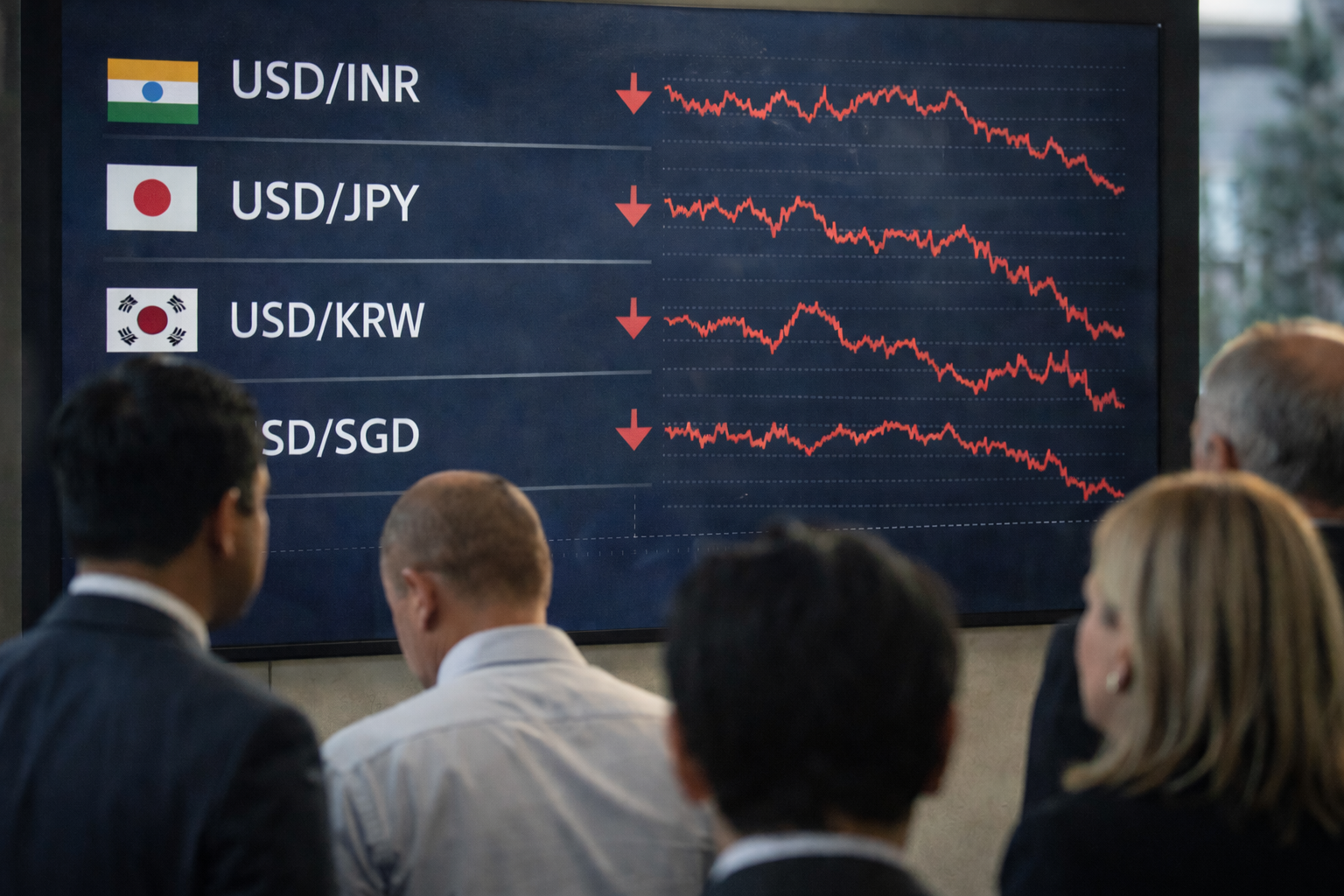
While current inflation risks are largely contained, the prospect of higher energy import costs is set to weaken trade balances, placing currencies like the Philippine Peso (PHP), Thai Baht (THB), Indian Rupee (INR), and Korean Won (KRW) under increased pressure, the agency said in a report.
Asia appears capable of managing the recent spike in oil prices for now.
This is because inflation across most of the region began from comparatively modest starting points and has been largely kept under control.
“But the real question is how high and how long prices stay elevated – because that’s what will ultimately determine the economic fallout,” Deepali Bhargava, regional head of research, Asia-Pacific at ING Group, said in the report.
Most major Asian economies, with the exceptions of Malaysia and Australia, are heavily dependent on imported energy and consistently run trade deficits in oil and gas.
This vulnerability leaves them exposed to global price spikes.
The lasting impact of persistent higher prices will be determined by three key factors.
Heavy reliance on Middle Eastern oil
The Persian Gulf is the source for a major portion of Asia’s crude oil.
Countries like Japan and the Philippines are highly dependent, sourcing nearly 90% of their oil from the region.
China and India also rely significantly on this supply, importing about 38% and 46% of their oil, respectively.
Any interruption within the crucial Strait of Hormuz shipping lane could curtail supply, potentially leading to shortages that would impede business operations and exert strain on Asia’s manufacturing sector, Bhargava said.
“Even without a physical supply disruption, higher global oil prices worsen trade balances and add to inflation pressures,” Bhargava added.
Thailand, Korea, Vietnam, Taiwan, and the Philippines are highly vulnerable to rising oil prices, with a 10% increase potentially worsening their current account balances by 40–60 basis points, ING calculations showed.
Extended rises would deepen these deficits. Australia, the region’s sole major oil and gas exporter, stands to benefit.
Higher oil import costs are not the only problem; Asian export growth may also suffer.
As Asian exporters increasingly pivoted from the US due to rising tariffs, the Middle East became a vital alternative growth market, which is now at risk.
“India is the most exposed to the Middle East-driven export demand, with China following closely behind. Any prolonged disruption in the region risks slowing this new export channel just as it was starting to gain momentum,” Bhargava noted.
Asian currencies likely to be pressurised
The foreign exchange (FX) markets are highly sensitive to oil price movements, even those that are brief.
A notable example is the June 2025 oil price spike, which lasted less than two weeks yet caused significant depreciation (approximately 1.5–3%) in the PHP, KRW, THB, and Japanese yen (JPY), according to the report.
This demonstrates that even a short-lived surge in oil costs can have a disproportionately large impact, Bhargava said.
“While inflation didn’t move much then because the conflict was so brief, a more prolonged period of elevated oil prices would be a very different story.”
A sustained conflict, combined with ongoing currency depreciation, is likely to intensify inflationary pressures throughout the region.
Given Asia’s significant dependence on imported energy, currencies such as the Indian rupee, Thai baht, Philippine peso, and Korean won are especially susceptible to fluctuations in oil prices and prolonged worsening of trade balances.
Strong inflation pass-through possible, but fiscal cushions can help
Higher oil prices can swiftly increase headline inflation in emerging Asia because energy constitutes a relatively large portion of consumer inflation baskets.
This effect is often amplified as elevated fuel costs subsequently contribute to rising food prices.
Given that food constitutes 25-45% of Consumer Price Index (CPI) baskets in Emerging Asia, certain economies are highly susceptible to external shocks.
Notably, countries like India and the Philippines are particularly vulnerable, where a 10% rise in oil prices could increase inflation by up to 0.4 percentage points.
“That said, the impact is far from uniform across the region. Several economies like Indonesia, Thailand and India are still partially shielded by fuel subsidies or regulated pricing, which dampens the direct pass‑through from global oil markets,” Bhargava said.
“Our base case had inflation across Asia rising but still staying within most central bank targets.”
The combination of a sustained price shock of this size and currency depreciation could drive inflation in the Philippines, for instance, to the high end of the Bangko Sentral ng Pilipinas’s 2-4% target.
This increased inflationary pressure makes it more likely the central bank will maintain current interest rates rather than proceeding with further cuts.
“Countries like Indonesia and India, which benefit from fuel subsidies, should still retain some room to ease, though the probability of further cuts would be lower.”
The post Asia's oil reliance puts currencies under pressure, says ING appeared first on Invezz