
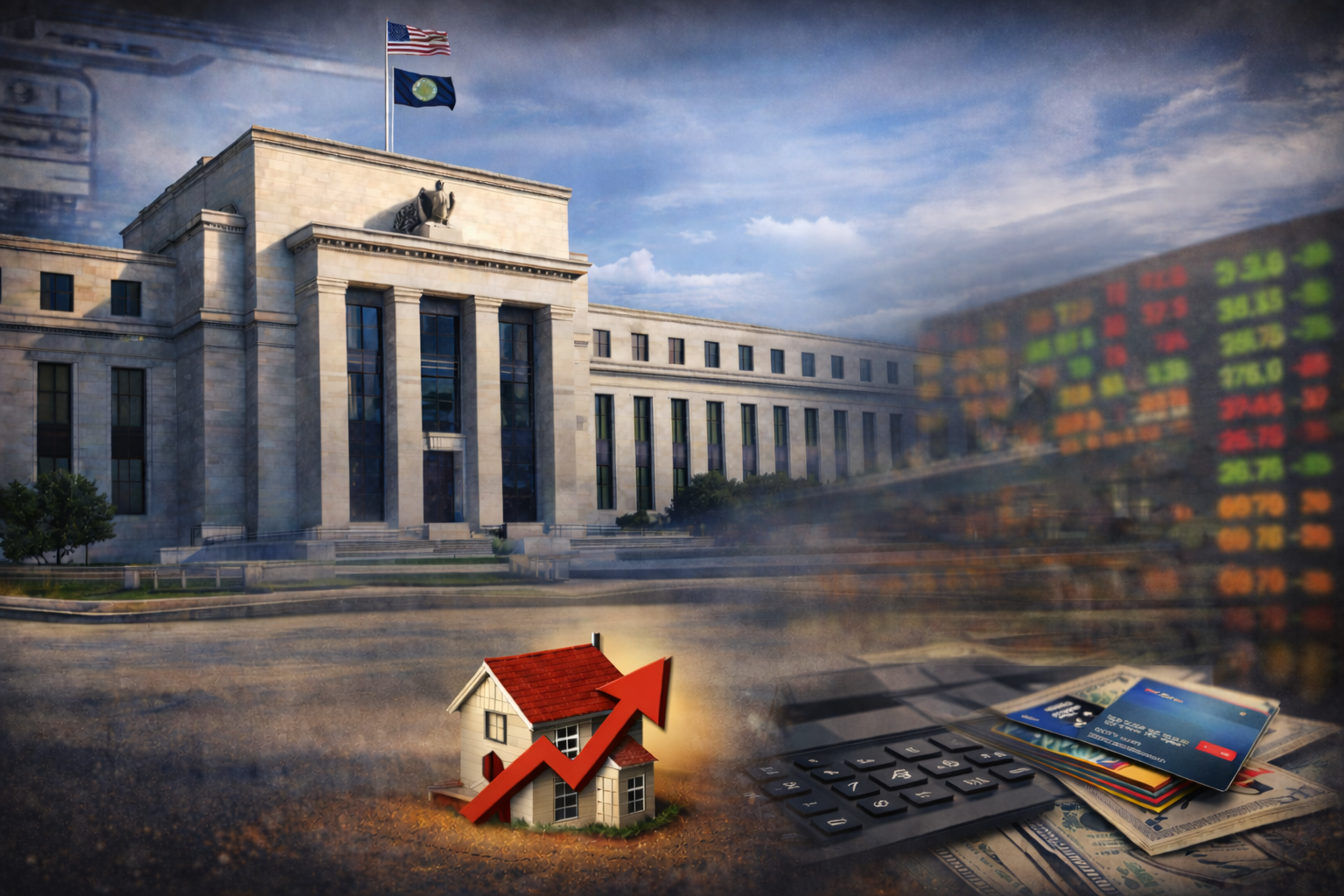
The US Federal Reserve left interest rates unchanged on Wednesday.
The federal funds rate remains in a range of 3.5% to 3.75% as policymakers paused after months of easing.
The move signals a more cautious, wait-and-see approach.
Officials are weighing a mixed economic backdrop. Growth remains solid, but inflation is still above target, and job market momentum is starting to cool.
The decision passed by a 10–2 vote. Governors Stephen Miran and Christopher Waller dissented. Both argued for an immediate quarter-point rate cut.
In its statement, the Fed said economic activity continues to expand at a “solid pace.” It also noted that the unemployment rate has begun to stabilize.
At the same time, officials warned that inflation remains “somewhat elevated” and uncertainty around the economic outlook is still high.
Mortgage market and the long-term yields disconnect
The fixed-rate mortgages don’t follow the Federal Reserve’s decisions.
Instead, they follow long-term Treasury yields, which are shaped by inflation expectations, concerns over government debt, and shifts in global investor sentiment.
That disconnect often catches consumers off guard.
Even when the Fed cuts rates, mortgage rates can move higher, as they did through much of the second half of 2025, undermining the assumption that easier monetary policy automatically means cheaper home loans.
The average 30-year fixed mortgage rate now sits at 6.17%, up 0.06 percentage points from a week earlier, according to the Mortgage Research Center.
The 15-year fixed rate stands at 5.38%. Both remain higher than many buyers expected just a few months ago.
For homeowners looking to refinance or buyers entering the market, the Fed’s latest decision offers little immediate relief.
Ultimately, mortgage rates hinge on where markets think long-term inflation and economic growth are headed, forces the Fed can influence, but not directly control.
Everyday borrowing: Credit cards, variable loans and what happens next
Here’s where the Fed’s hold matters directly.
Credit cards, home equity lines of credit (HELOCs), and adjustable-rate mortgages track the prime rate, which is linked to the federal funds rate at approximately fed funds plus 3% points.
Currently, the prime rate sits at 6.75%.
The average credit card interest rate in the US fell to 23.79% in January 2026, the lowest in nearly three years, according to LendingTree.
But here’s the problem: even though the Fed cut rates three times in the second half of 2025, credit card rates only declined 65 basis points (less than three-quarters of the full 75-basis-point reduction).
Credit card companies have delayed passing the full benefit to existing customers.
At 23.79%, a $7,000 balance with $250 monthly payments takes 41 months and costs $3,314 in interest.
The Fed’s hold means this rate won’t move soon. HELOCs average 7.44% nationally, while adjustable-rate mortgages remain vulnerable to future increases.
The one bright spot for savers is that high-yield savings accounts still offer attractive rates of 4 to 5% APY, about 10 times the national average savings rate of 0.39%.
Economists broadly expect the Fed to pause through spring before cutting again in June 2026.
Until then, consumers should focus on paying down high-interest debt and shopping around for better rates on new borrowing.
The post Fed keeps rates unchanged: what it means for mortgages, credit cards and loans appeared first on Invezz