
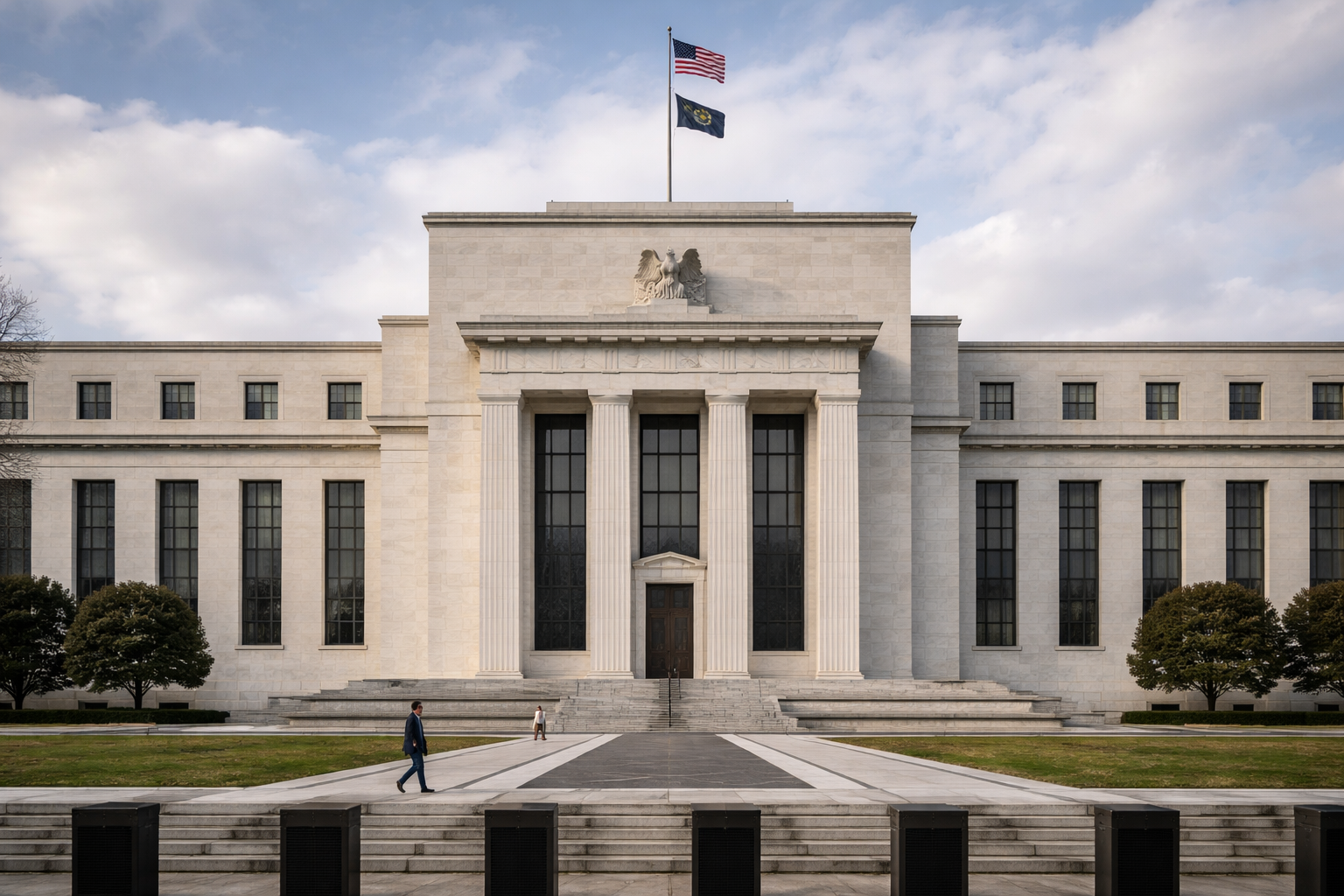
The Federal Reserve left interest rates unchanged on Wednesday, but an unusually divided vote underscored growing disagreement among policymakers over the future path of monetary policy as geopolitical tensions and persistent inflation cloud the outlook.
The rate-setting Federal Open Market Committee voted 8–4 to maintain the benchmark federal funds rate in a range of 3.5% to 3.75%, marking the third consecutive meeting without a change.
Markets had widely expected the central bank to hold steady, but the degree of dissent surprised investors.
The decision comes amid heightened uncertainty tied to the conflict in the Middle East, rising energy prices, and a looming leadership transition at the Fed.
Rare dissent highlights policy divide
The 8–4 vote marked the first time since October 1992 that four officials dissented in an FOMC decision, reflecting a sharp divergence in views within the committee.
Governor Stephen Miran dissented in favor of a quarter-point rate cut, continuing his stance since joining the central bank in September 2025.
Meanwhile, Cleveland Fed President Beth Hammack, Minneapolis Fed President Neel Kashkari, and Dallas Fed President Lorie Logan supported holding rates but opposed language in the policy statement that suggested a potential shift toward future easing.
The trio objected to phrasing indicating “the extent and timing of additional adjustments,” which implies that the next move in rates could be downward.
Their opposition reflects concern that persistent inflation may require a more cautious approach.
In its statement, the Fed noted that “developments in the Middle East are contributing to a high level of uncertainty about the economic outlook,” while also acknowledging that “Inflation is elevated, in part reflecting the recent increase in global energy prices.”
Inflation risks and labor market signals complicate outlook
Policymakers are navigating a complex economic backdrop where inflation remains above the Fed’s 2% target for five consecutive years, while labor market conditions show signs of resilience but also emerging fragility.
Recent data showed consumer price inflation surged in March by the most in nearly four years, largely driven by a sharp rise in gasoline prices.
Brent crude has also climbed to its highest level since June 2022, intensifying concerns that energy costs could spill over into broader price pressures.
At the same time, the labor market presents mixed signals.
While nonfarm payrolls rose by 178,000 in March and the unemployment rate edged down to 4.3%, net hiring has slowed significantly over the past year.
Policymakers have noted that this leaves the job market vulnerable to potential shocks.
The combination of elevated inflation and a softening labor market raises the risk of a stagflation-like scenario, where policymakers face conflicting pressures on interest rates.
Powell’s final meeting and leadership transition in focus
The meeting is widely expected to be the last chaired by Jerome Powell, whose term as Fed chair expires on May 15.
Attention is now shifting toward his successor, Kevin Warsh, whose nomination has advanced through the Senate Banking Committee.
The leadership transition adds another layer of uncertainty to the policy outlook, particularly as Warsh has signaled potential changes, including shrinking the Fed’s balance sheet and revisiting its inflation framework.
Powell is scheduled to hold a press conference following the decision, where markets will look for guidance on future policy direction as well as his own plans after stepping down as chair.
While his term as chair is ending, Powell could remain on the Board of Governors until January 2028.
The post Fed split stuns markets as rates held amid war, inflation fears appeared first on Invezz