
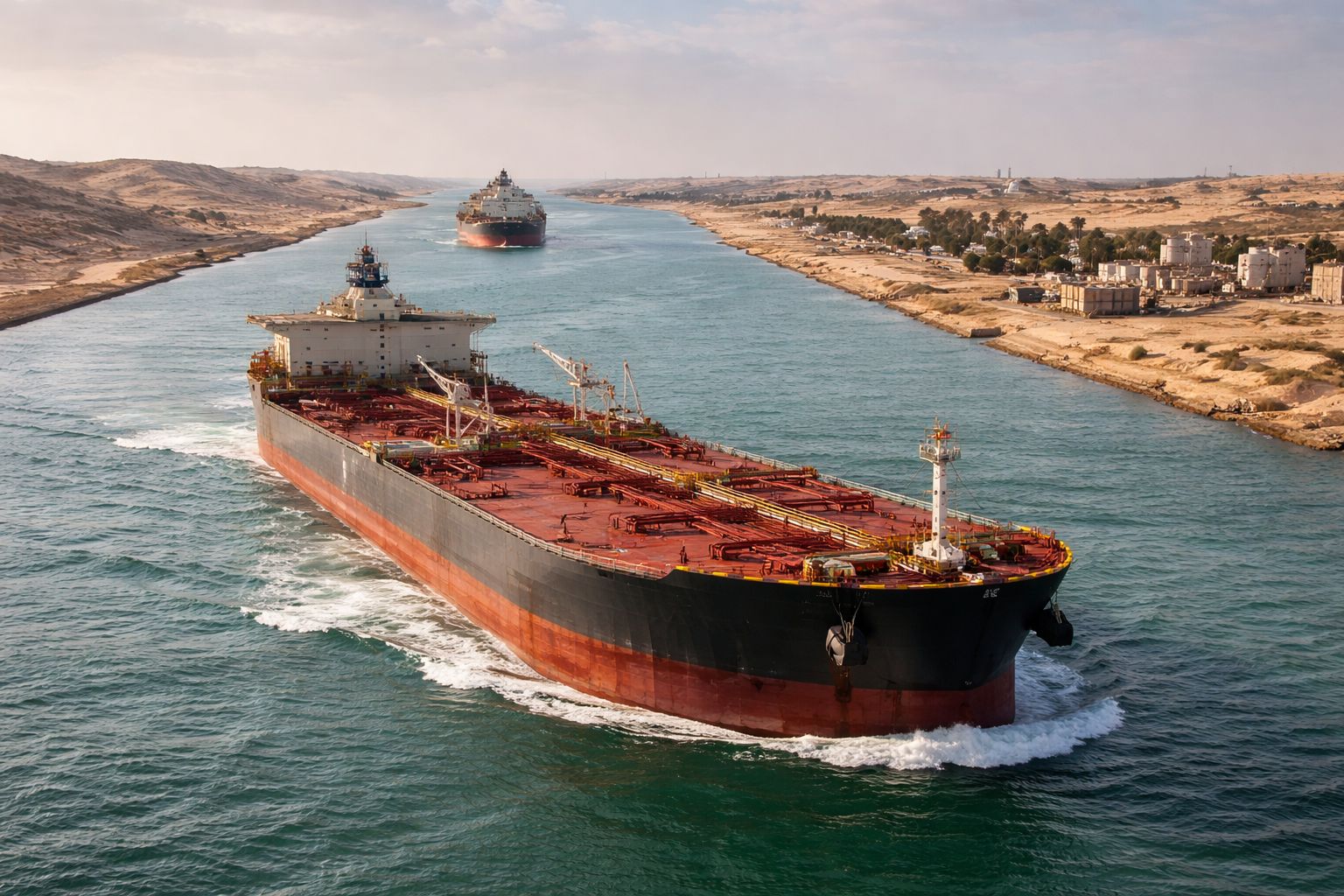
Even with the two-week ceasefire between the US and Iran, shipping activities through the Strait of Hormuz would take several weeks to normalise.
Additionally, the US Energy Information Administration (EIA) stated on Tuesday that fuel prices may continue to increase for months, even after the Strait of Hormuz is reopened.
The EIA’s assessment contradicted US President Donald Trump’s promise that consumers would experience immediate relief once the conflict with Iran concludes.
Meanwhile, according to Rystad Energy, oil and gas production in the affected regions of the Middle East would take months to return to pre-war levels.
The US-Israeli conflict with Iran, currently in its second month, has caused a global surge in oil and fuel prices.
This spike is a direct result of Iran’s blockade of the Strait of Hormuz, a critical trade chokepoint through which one-fifth of the world’s oil and gas passes.
Prices likely to remain volatile
Oil prices dropped significantly after the US and Iran agreed to a two-week ceasefire, alleviating concerns about extended supply disruptions.
Brent crude, which plummeted by as much as 16%, was last trading around $92 per barrel. Similarly, West Texas Intermediate (WTI) experienced its sharpest decline in almost six years, with its price settling near $93.31 per barrel.
In exchange for Tehran reopening the Strait of Hormuz, a ceasefire is anticipated to bring a halt to the US-Israeli military operation. This proposed agreement reportedly permits Iran and Oman to impose transit fees on ships utilising the strait.
As pump prices reached multi-year highs, causing Trump’s approval rating to dip to new lows, he has consistently assured Americans that the sticker shock will be short-lived.
The US Department of Energy’s statistical arm, the EIA, presented a less optimistic view in its latest short-term energy outlook report.
It has significantly raised its forecast for the global benchmark Brent crude oil spot price, now seeing it average $96 a barrel this year, a sharp increase from the prior forecast of $78.84. Consequently, the EIA anticipates continued increases in both retail gasoline and diesel prices.
The agency attributed the expected high prices to the time required to fully restore oil flows. It stated that even after the war concludes, it will take months for flows to resume fully through the Strait of Hormuz and for Middle Eastern producers to return to normal output levels, thus keeping prices elevated during this period.
“Just as we had never before seen the strait close, we’ve never seen it reopen. What exactly that looks like remains to be seen,” the EIA said.
We maintain a risk premium on crude oil prices throughout the forecast period as we expect uncertainty around future supply disruptions to keep prices above pre-conflict levels.
“Further price direction will hinge on whether talks translate into a durable agreement and a sustained normalisation of flows through the strait, with volatility likely to persist during negotiations later this week,” Warren Patterson, head of commodities strategy at ING Group, said in a note.
Flows through Hormuz
In a commentary last week, Rystad Energy had pointed out that oil flows through the Strait of Hormuz could resume within days after the end of hostilities, but returning toward 20 million barrels per day would take several weeks.
“Trade patterns and inventories will take longer to rebalance, while production may require months to return to pre-war levels,” Rystad’s Chief Economist Claudio Galimberti had noted in the commentary.
This implies a period where financial markets may point to normalization, while physical markets continue to reflect tightness.
The risk that the two-week ceasefire would not last remains significant.
Should the conflict become prolonged or if production and infrastructure suffer more extensive damage, the reopening of the Strait would be delayed, leading to extended disruptions throughout global supply chains.
Consequently, a reassessment of both the pace of normalisation and the overall market outlook would become necessary in that event.
Markets will likely maintain significant volatility until the path toward de-escalation becomes clearer.
Uncertainty in gas market
Following the announcement of a 14-day ceasefire between the US and Iran, European gas prices temporarily fell by nearly 20%.
“Even if the sea routes are safe for two weeks, the supply situation remains complicated,” Carsten Fritsch, commodity analyst at Commerzbank AG, said.
The loss of nearly 17% of Qatar’s LNG export capacity for the next three to five years is significant, compounded by the time required to bring the already-shut-down LNG facilities back online.
The destruction of Liquefied Natural Gas (LNG) trains S4 and S6 in Qatar’s Ras Laffan Industrial City last month has resulted in a force majeure declaration. This incident cut capacity by 17%, which is approximately 12.8 million tonnes per annum (Mtpa).
Despite the uncertainty surrounding the speed at which shipping traffic can be fully restored, the temporary opening could permit the 16 LNG tankers currently stalled in the Persian Gulf to transit the Strait of Hormuz, according to Commerzbank.
“Overall, however, the situation in the gas market remains tense, meaning gas prices are likely to continue trading at levels well above pre-crisis levels,” Fritsch added.
Shipping companies remain cautious
Meanwhile, Maersk, the world’s second-largest container shipping operator, said it would need more clarity about the current situation in the Strait of Hormuz.
“The ceasefire may create transit opportunities, but it does not yet provide full maritime certainty and we need to understand all potential conditions attached,” the Danish company stated.
Maersk has guaranteed it is “working with urgency” to clarify how ships can pass through the Strait of Hormuz, an area that has faced severe restrictions for months.
Hapag-Lloyd, the German shipping line, has also taken a cautious approach, mirroring the tone of others.
CEO Rolf Habben-Jansen communicated to clients on Wednesday that it’s premature to determine the volume of traffic that will be able to use the crucial waterway, according to a Euronews.com report.
Decisions on transits, the company stressed, rely on ongoing risk assessments, vigilant monitoring of the security landscape, and guidance from both authorities and partners.
Habben-Jansen cautioned that restoring a completely normal network would require at least six weeks, even if certain vessels are cleared to exit the Gulf relatively soon.
The company currently has six ships belonging to Hapag-Lloyd among the estimated 1,000 merchant vessels stranded in the Persian Gulf.
This significant backlog is anticipated to severely complicate the management of traffic resumption in the Strait of Hormuz. Furthermore, the ongoing conflict is costing Habben-Jansen approximately [MONEY value=”55000000″ currency=”usd” notation=”long” replace=”false”] weekly.
The post Hormuz normalisation to take months despite ceasefire; prices seen volatile appeared first on Invezz