
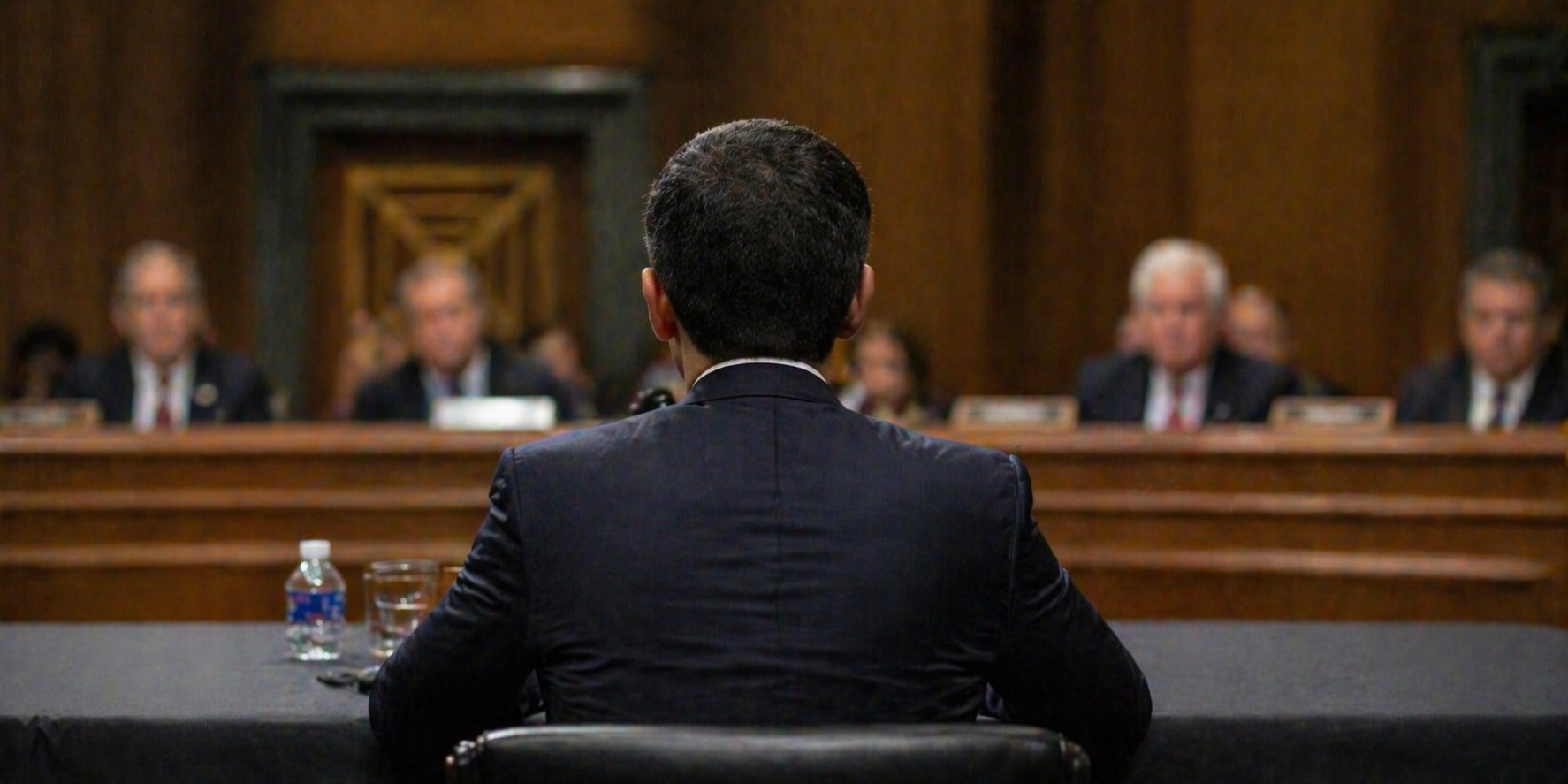
Kevin Warsh, nominated by President Donald Trump to lead the Federal Reserve, told lawmakers on Tuesday that he would work with the Treasury Department to reduce the central bank’s balance sheet, outlining what could become a long-term shift in monetary policy strategy.
Speaking during his Senate confirmation hearing, Warsh emphasized coordination between fiscal and monetary authorities as key to achieving this goal.
“Working with the Treasury Secretary, we’re going to have to find a way in which we can take the balance sheet and make it smaller,” he said as part of his testimony to succeed current Fed Chair Jerome Powell.
Warsh targets large Fed holdings
Warsh’s stance reflects broader concerns about the size and impact of the Fed’s balance sheet, which has expanded significantly since the global financial crisis.
“The big balance sheet has become an ordinary, recurring force” and “has been quite unhelpful, and is part of the reason why the Fed is in the business of politics,” Warsh said. If Fed holdings were smaller, “I think interest rates could be lower, inflation could be better, and the economy could be stronger,” he said.
The Fed’s balance sheet grew from under $1 trillion before the 2007–2008 financial crisis to a peak of $9 trillion in 2022, driven by large-scale purchases of Treasury and mortgage bonds aimed at stabilizing markets and supporting the economy during periods of stress.
Holdings currently stand at about $6.7 trillion, with projections from the New York Fed suggesting they could reach $10 trillion by 2035 under current dynamics.
Warsh argued that while such policies may have been justified during earlier crises, their continued use raises concerns about market distortion and the Fed’s role in the broader economy.
He also suggested that large holdings may force the central bank to maintain higher short-term interest rates than would otherwise be necessary.
Gradual approach and coordination challenges
Despite his criticism of the current framework, Warsh did not provide detailed steps for reducing the balance sheet. Instead, he emphasized a cautious and transparent approach.
He said any effort to shrink holdings would be communicated clearly and executed “slowly and deliberatively.”
Market participants noted that the mechanics of coordination between the Fed and the Treasury remain unclear. Derek Tang, an analyst at LH Meyer, said he believes “Warsh would like Treasury and the Fed to communicate more clearly to each other what their respective plans” are over debt issuance.
Others suggested that outright asset sales may not be part of the strategy. “Warsh certainly seemed to suggest a gradual approach to decreasing the balance sheet, which to me suggests that outright asset sales are unlikely,” said Gennadiy Goldberg, head of US rates strategy at TD Securities in a Reuters report.
Debate over risks and policy framework
Warsh’s proposals come amid ongoing debate about the role and risks of a large Fed balance sheet. While many policymakers remain comfortable with current levels—citing effective rate control and ample liquidity—critics argue that large holdings could distort financial markets and expose the Fed to political scrutiny.
The central bank has also faced losses tied to its asset holdings, though these do not directly impact its operational capacity.
An emerging framework suggests that reducing regulatory liquidity requirements and encouraging greater use of central bank facilities could lower demand for reserves, allowing the Fed to shrink its balance sheet over time.
Some analysts argue that a smaller balance sheet could push long-term interest rates higher, potentially giving the Fed room to lower short-term rates in response.
John Williams recently noted that such dynamics could theoretically allow for lower policy rates, though he cautioned that the impact would be difficult to predict.
The post Fed pick Warsh presses case to shrink balance sheet appeared first on Invezz